
ひな祭りの物語:日本の伝統行事
The Story of Hinamatsuri: Japan’s Doll Festival
Every year on March 3rd, families across Japan celebrate Hinamatsuri, also known as Girls’ Day or the Doll Festival. This tradition dates back over 1,000 years to the Heian period (794-1185).
Originally, people believed that evil spirits could bring bad luck to children. To protect them, families used paper dolls called “hitogata”, which they floated down rivers to carry away bad luck. This practice later evolved into displaying elegant dolls in homes, representing the emperor, empress, and members of the royal court.
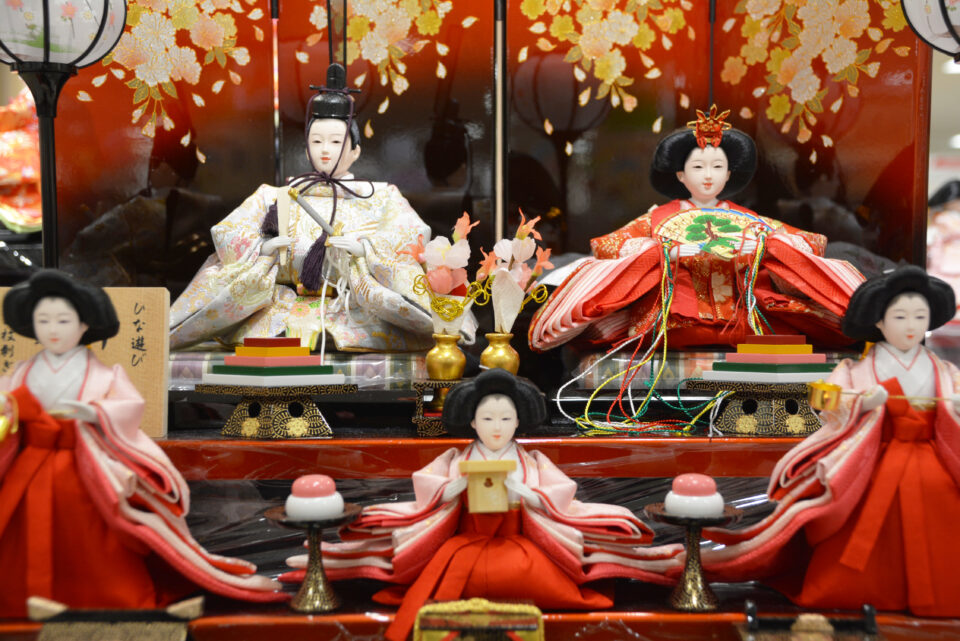
Today, many families set up beautiful displays of traditional hina dolls, often passing them down through generations. The dolls wear Heian-era kimonos and are arranged on a red, multi-tiered platform. The Emperor (Odairi-sama) and Empress (Ohina-sama) sit at the top, while court musicians, ladies-in-waiting, and samurai fill the lower tiers.
During Hinamatsuri, families enjoy special foods like chirashizushi (scattered sushi), hishi-mochi (diamond-shaped rice cakes), and shirozake (sweet white sake). Parents and grandparents wish for their daughters to grow up healthy, strong, and happy.
Although Hinamatsuri is not a public holiday, it remains a beloved tradition in Japan, blending history, family, and the beauty of spring.
Vocabulary List for “The Story of Hinamatsuri”
- Doll Festival → ひな祭り
- Heian period → 平安時代
- Evil spirits → 悪い霊
- Bad luck → 不運
- Paper dolls (Hitogata) → 紙人形(人形・ひとがた)
- Floating down rivers → 川に流す
- Elegant dolls → 美しいひな人形
- Emperor and Empress → 天皇と皇后
- Royal court → 宮廷
- Multi-tiered platform → 段飾り
- Heian-era kimono → 平安時代の着物
- Ladies-in-waiting → 女官
- Court musicians → 宮廷の楽士
- Samurai → 侍
- Pass down through generations → 代々受け継ぐ
- Special foods → 特別な料理
- Chirashizushi (Scattered sushi) → ちらし寿司
- Hishi-mochi (Diamond-shaped rice cakes) → 菱餅
- Shirozake (Sweet white sake) → 白酒
- Wish for (someone’s) health and happiness → 健康と幸せを願う
- Beloved tradition → 愛される伝統
- Public holiday → 祝日
ひな祭りの物語:日本の伝統行事
毎年3月3日、日本の家庭ではひな祭り(女の子の節句)をお祝いします。この伝統は約1000年前の**平安時代(794~1185年)**に始まりました。
昔、人々は「悪い霊」が子どもに不運をもたらすと信じていました。そのため、家族は紙で作った「人形(ひとがた)」を川に流し、厄払いをしていました。この風習が変化し、やがて家庭に美しいひな人形を飾るようになりました。これらの人形は、天皇や皇后、宮廷の貴族たちを表しています。
現在、多くの家庭では伝統的なひな人形を飾り、世代を超えて受け継がれています。ひな人形は平安時代の着物をまとい、赤い段飾りに並べられます。最上段にはお内裏様(天皇)とお雛様(皇后)が座り、その下に宮廷の楽士、女官、侍たちが配置されます。
ひな祭りの日には、ちらし寿司、菱餅(ひしもち)、白酒(しろざけ)などの特別な料理を楽しみます。親や祖父母は、娘が健康で、強く、幸せに成長することを願います。
ひな祭りは祝日ではありませんが、日本の春を彩る大切な行事として、多くの家庭で今も受け継がれています。